
Last updated: July 2026 Reviewed by the BC strata and commercial property management team at Duka Management
Commercial strata management in British Columbia sits at the intersection of business operations, shared governance, financial reporting, maintenance planning, and owner communication.
It is not the same as residential strata management, even though both operate under the Strata Property Act. It is also not the same as fee-simple commercial property management, where one owner or ownership group controls the whole asset. In a commercial strata, multiple owners share common property, costs, governance duties, and long-term building decisions.
That structure can work very well when council has clear records, reliable financial reporting, strong vendor control, and a manager who understands the commercial realities of the property. It can become frustrating when business-use needs are treated like ordinary residential issues or when shared responsibilities are unclear.
This article is educational information, not legal, accounting, tax, engineering, insurance, leasing, safety, or investment advice. Councils and owners should rely on qualified professionals for property-specific decisions.

What Commercial Strata Management Means
Commercial strata management is the professional support used to help a business-use strata corporation operate properly. Commercial strata properties may include retail plazas, office strata buildings, medical or professional units, light industrial complexes, warehouse strata, service commercial properties, parking components, or mixed-use buildings with residential and commercial sections.

The Province of BC explains that strata properties can include residential, commercial, retail, industrial, and mixed-use developments. Owners own their individual strata lots and share common property and common assets through the strata corporation.
For commercial strata councils, management support may include:
- meeting and council support
- owner and occupant communication
- bylaw and rule administration under council direction
- common property maintenance coordination
- vendor sourcing and follow-through
- budget and monthly financial reporting
- operating fund and contingency reserve fund tracking
- depreciation report coordination
- insurance, emergency, records, and contract organization
The manager does not replace the strata council. Council remains responsible for governance and decisions. A strong manager helps council understand issues, review records, compare options, communicate clearly, and execute approved work.
Duka’s commercial and strata property management services in BC are relevant where a property needs commercial operating awareness and strata governance discipline.
Commercial Strata vs. Residential Strata
Commercial strata management and residential strata management share some foundations: council oversight, owners, bylaws, rules, meetings, budgets, strata fees, common property, common assets, and records. The day-to-day pressure is different.
Commercial owners and occupants often care about customer access, signage, operating hours, loading, deliveries, waste, parking, security, exterior presentation, business interruption, tenant communication, and contractor timing. Industrial owners may also need attention on overhead doors, yard access, vehicle movement, specialized equipment, and heavier wear on common areas.
In a residential strata, a hallway cleaning issue may be a service concern. In a commercial strata, the same issue can affect customers, tenants, employee safety, and owner confidence.
That does not mean every commercial strata is more complex than every residential strata. It means the management process has to understand business-use consequences. Slow follow-up on access, lighting, drainage, HVAC, security, or loading issues can disrupt operations quickly.
Commercial Strata vs. Fee-Simple Commercial Management
Commercial strata management is also different from fee-simple commercial property management. In a fee-simple commercial property, one owner or ownership group usually controls the building and land. The property manager may focus on lease administration, tenant operations, operating cost recovery, landlord reporting, asset maintenance, and owner decisions.
In a commercial strata, the strata corporation governs shared property. Owners may operate businesses in their own strata lots or lease those lots to tenants, but they are still part of a shared governance structure. The strata corporation is not one landlord managing one asset. It is a corporation made up of multiple owners with shared rights and obligations.
That difference matters when an issue affects common property, limited common property, shared systems, parking, loading areas, signage, business-use restrictions, insurance, strata fees, special levies, CRF planning, or tenant behaviour that affects other owners.
The strata manager supports the strata corporation and council, not every private lease inside each strata lot.
The BC Strata Property Act Context
Commercial strata councils need to operate inside the same general BC strata framework as other strata corporations. That includes the Strata Property Act, regulations, bylaws, rules, council decisions, required owner votes, budgets, records, and strata plan documents. The management company should not provide legal opinions, but it should know when documents matter and when council should obtain legal advice.
Bylaws, Rules, and Use Questions
Commercial strata bylaws and rules can affect daily business use. Depending on the property, they may address parking, signage, waste disposal, deliveries, hours of access, noise, odours, exterior appearance, safety, alterations, and permitted or restricted uses.
Commercial use questions can create tension because the issue may be operational for one owner and disruptive for another. For example:
- a restaurant or medical user may have different waste, access, odour, or delivery needs
- an industrial user may create more loading or parking pressure
- a storefront may want signage that changes exterior appearance
Council should avoid informal guesswork. The bylaws, rules, strata plan, lease context, and professional advice may all matter.
Sections in Mixed-Use Stratas
Some mixed-use strata corporations use sections to manage different owner groups.
The Province of BC’s guidance on strata sections explains that sections can exist within a strata corporation and may have their own executive, operating fund, contingency reserve fund, budget, and bylaws for certain matters.
This is important in properties with residential and commercial components or different commercial uses.
Management support should help council and section executives keep authority, records, budgets, and communication clear. Sections can reduce friction, but only when the governance is understood.
Common Property and Limited Common Property
Commercial strata questions often turn on whether something is part of a strata lot, common property, or limited common property.
The Province of BC explains that strata corporations are generally responsible for repairing and maintaining common property and common assets, while owners are generally responsible for their strata lots. Bylaws and property facts can affect the details.
For commercial strata properties, these questions may involve loading areas, parking stalls, storage areas, signage areas, exterior doors, roof components, shared mechanical systems, garbage rooms, yard areas, and access systems.
Good management helps council identify the right question, gather documents, coordinate advice, and communicate the decision properly.
Shared Costs, Operating Funds, and the CRF
Commercial strata management needs strong financial organization because shared costs become sensitive quickly.
The Province’s budgeting and strata fees guidance explains that strata corporations have an operating fund and a contingency reserve fund, and that owners contribute through strata fees. The operating fund covers frequent common expenses, while the contingency reserve fund, or CRF, supports less frequent or unusual common expenses.
For commercial strata councils, financial management should make key questions easier: Are strata fees being collected? Are expenses above budget? Are vendor invoices supported? Is the CRF contribution aligned with building needs? Are section expenses separated where sections exist? Are owners receiving understandable explanations?
Commercial properties may also have more complex cost sensitivities. A repair that affects access, signage, security, loading, or customer flow may affect different owners differently. Transparent reporting reduces conflict because council can show what was approved, why it was needed, and how it fits the budget.
Maintenance, Depreciation Reports, and Vendor Coordination
Commercial strata maintenance protects business continuity and long-term asset value.
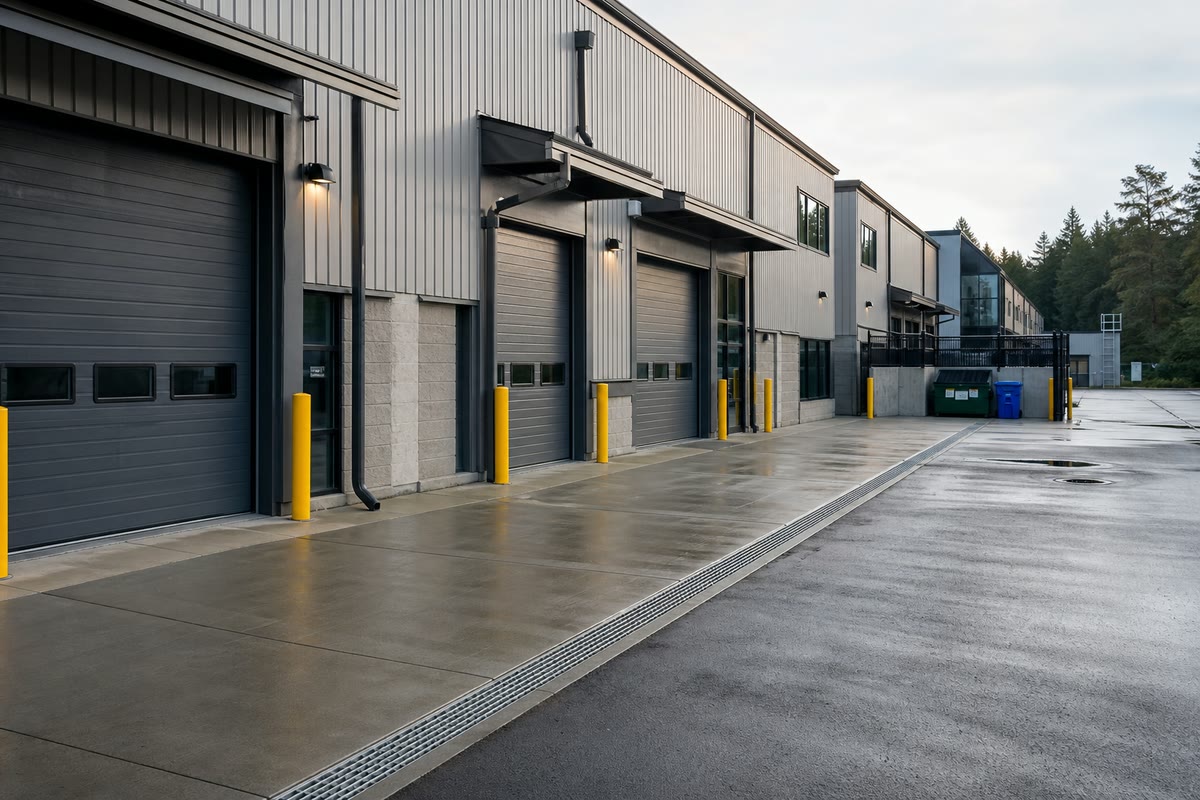
Common priorities may include roofs, drainage, parking areas, lighting, fire and life-safety systems, elevators, access control, HVAC, exterior walls, landscaping, waste areas, loading zones, overhead doors, pavement, and shared utility systems.
BC’s depreciation report framework also matters. The Province says depreciation reports help strata corporations plan for repair, replacement, and renewal of common property and assets over a 30-year period. Current guidance says strata corporations with five or more strata lots must obtain reports every five years from a qualified provider, and they can no longer defer the report by annual 3/4 vote.
The manager’s role is not to replace a qualified depreciation report provider, engineer, building envelope consultant, lawyer, accountant, or insurance advisor. The manager helps council keep inspections, records, vendor scopes, approvals, invoices, communication, and follow-through organized.
That is where Duka’s BC building consulting support can be useful when a commercial strata issue needs stronger coordination between building records, vendor information, budgets, and professional advice.
Communication With Owners, Tenants, and Occupants
Commercial strata communication can be more complicated than residential communication because the person using the space may not be the owner. An owner may operate the business directly, while another may lease the strata lot to a tenant. Some notices need to go to owners, occupants, or both.
Communication matters when the property is dealing with service interruptions, exterior repairs, access changes, parking or loading restrictions, waste rules, bylaw concerns, emergency repairs, insurance records, meetings, budgets, and owner votes.
The management process should keep communication professional, documented, and proportionate. If tenant behaviour affects common property or other owners, the strata corporation may need to communicate through the owner while addressing the practical building issue.
What to Ask a Commercial Strata Management Company
Before choosing or changing a management provider, commercial strata councils should ask practical questions about fit.
Useful questions include:
- Are you licensed to provide strata management services in BC?
- What experience do you have with commercial, industrial, retail, office, or mixed-use strata properties?
- How do you review bylaws, rules, sections, common property, and limited common property during onboarding?
- How do you separate operating fund, CRF, section, and special levy activity?
- How do you track maintenance requests, vendor work, and recurring issues?
- How do you handle after-hours emergencies that affect business operations?
- When do you recommend legal, accounting, engineering, insurance, or consulting advice?
Price matters, but scope matters more. A low fee can become expensive if the council receives weak records, unclear reporting, slow vendor follow-up, or poor communication around shared costs.
How Duka Supports Commercial Strata Councils in BC
Duka’s BC strata management services support councils with communication, administration, financial reporting, maintenance coordination, vendor follow-through, and practical building oversight.
For commercial strata councils, that support is most valuable when it connects governance and operations. A signage issue may be a bylaw question, an exterior appearance issue, and an owner communication issue at the same time. A roof leak may involve common property, insurance, tenant impact, contractor coordination, CRF planning, and depreciation report context.
Duka’s role should be understood as management support, not a substitute for specialized professional advice. A strong manager helps council know what information is missing, what records need review, what decisions are required, and when outside expertise should be brought in.
Learn more about Duka Management’s BC team, review the BC property management FAQ, or contact the BC office if your commercial strata needs a more organized management process.
FAQ: Commercial Strata Management in BC
What is commercial strata management?
Commercial strata management is professional management support for strata corporations made up of business-use strata lots, such as retail, office, industrial, medical, or mixed-use properties. It supports council with governance, maintenance, financial reporting, owner communication, vendor coordination, and records.
Does the Strata Property Act apply to commercial strata in BC?
Yes. BC strata developments can include commercial, industrial, retail, residential, and mixed-use properties. If the property is a strata corporation, the Strata Property Act, regulations, bylaws, rules, strata plan documents, council decisions, and owner votes may all affect management.
What is the difference between commercial strata and fee-simple commercial property?
In a fee-simple commercial property, one owner or ownership group usually controls the building and land. In a commercial strata, multiple owners own strata lots and share common property, costs, governance responsibilities, and long-term repair decisions through the strata corporation.
Are depreciation reports required for commercial strata corporations?
Generally, BC strata corporations with five or more strata lots must obtain depreciation reports every five years from a qualified provider, and current guidance says they can no longer defer the report by 3/4 vote. Councils should review provincial guidance and obtain advice for their property.
Can a commercial strata restrict business uses?
Commercial strata bylaws and rules may affect use, signage, nuisance, access, waste, parking, deliveries, and other operational matters. Whether a specific restriction is enforceable depends on the strata’s documents, the Strata Property Act framework, and legal advice.
Final Thoughts
Commercial strata management in BC works best when council treats the property as both a business-use asset and a strata corporation.
That means owners need clear financial reporting, reliable vendor coordination, practical maintenance records, strong communication, and a management process that respects the Strata Property Act, bylaws, rules, sections, and shared-cost structure.
If your BC commercial strata needs stronger management support, review Duka’s BC strata management services or request a BC strata management proposal.